
Product: FreeConferenceCall
Type: Communication platform
Platforms: Desktop, mobile app
Role: Product Design / Design Leadership
Focus: Monetization, account upgrades, desktop and mobile UX
Background
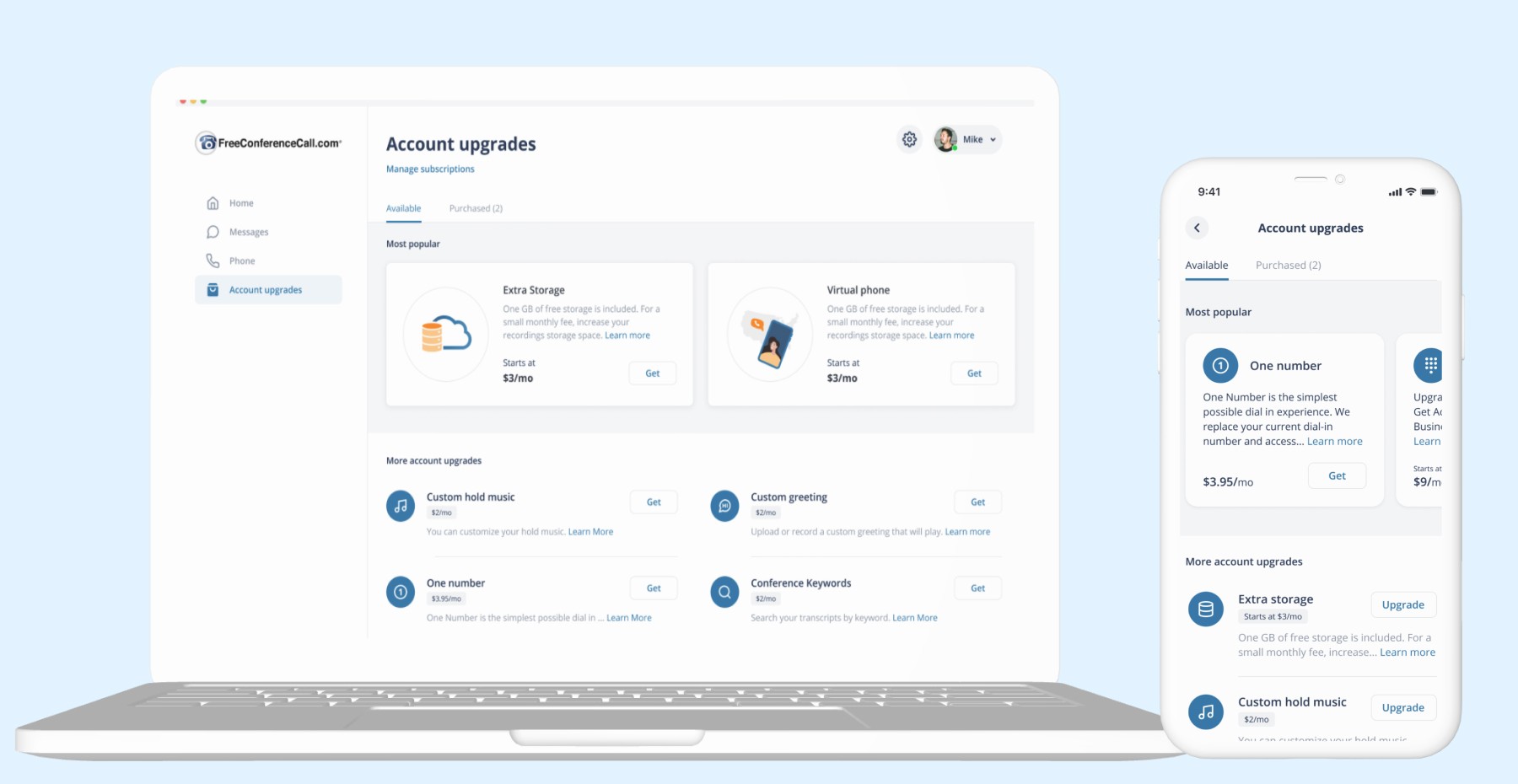
FreeConferenceCall.com had built strong adoption by offering core communication tools for free. As the product matured, the team saw an opportunity to create clearer revenue paths through paid upgrades and add-ons across desktop and mobile.
This work focused on making those premium options easier to surface and easier to understand inside an established product, without taking away from the value users already expected from the free experience.
The Challenge
This was a new direction for the product. FreeConferenceCall.com had built trust around being free, so introducing paid upgrade options raised understandable skepticism, especially from stakeholders concerned that monetization could conflict with the brand promise.
At the same time, a larger redesign was already underway, which meant upgrade concepts had to work across both the existing product experience and the direction the new version was heading. I was also splitting time across Bullhorn marketing work, so the challenge was not just designing the upgrade flow itself, but doing it in a way that could hold up across shifting product conditions and limited bandwidth.
Role
I helped shape the desktop and mobile upgrade experience, focusing on how premium options could be introduced inside a free product without weakening trust or usability.
My work centered on UX direction, upgrade flow concepts, and aligning monetization ideas across both the current product and the larger redesign already in progress.
Results
The upgrade rollout showed that monetization could work inside FreeConferenceCall.com without undermining the value of the free product. During the soft launch, all upgrades saw an average increase of 5%, with some of the strongest gains coming from Pay What You Can, which increased by 10%, and Huddle Individual, which increased by 12%.
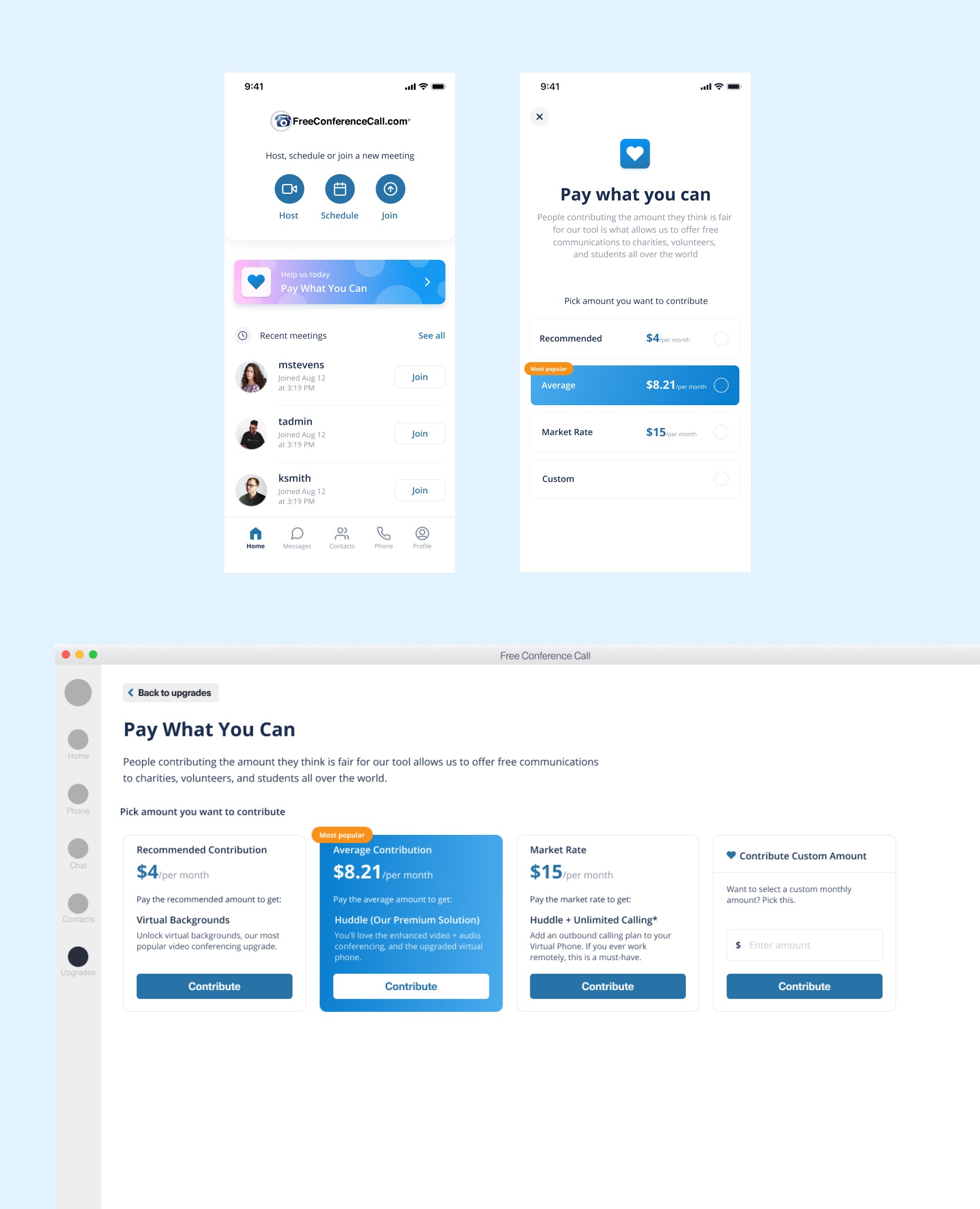
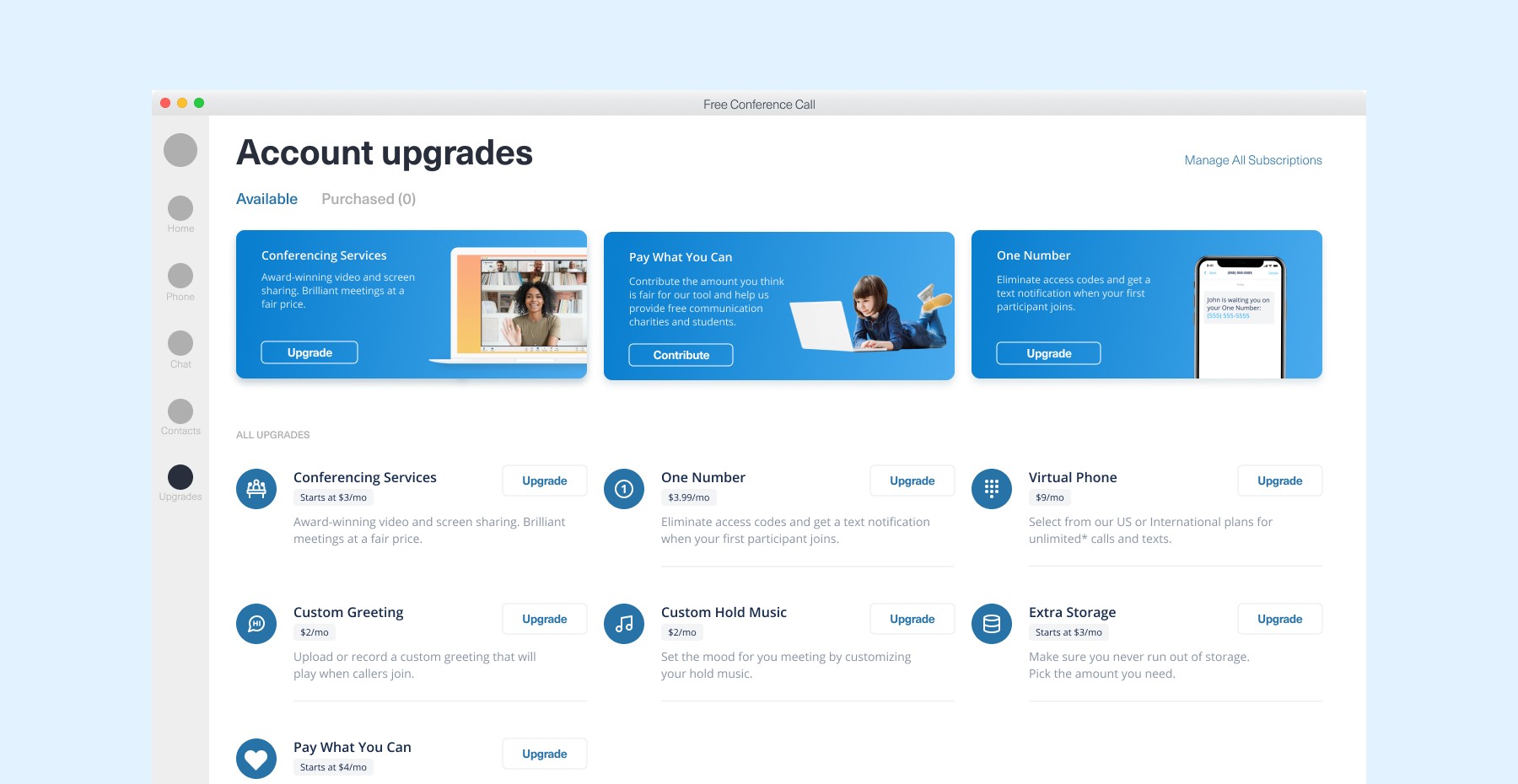
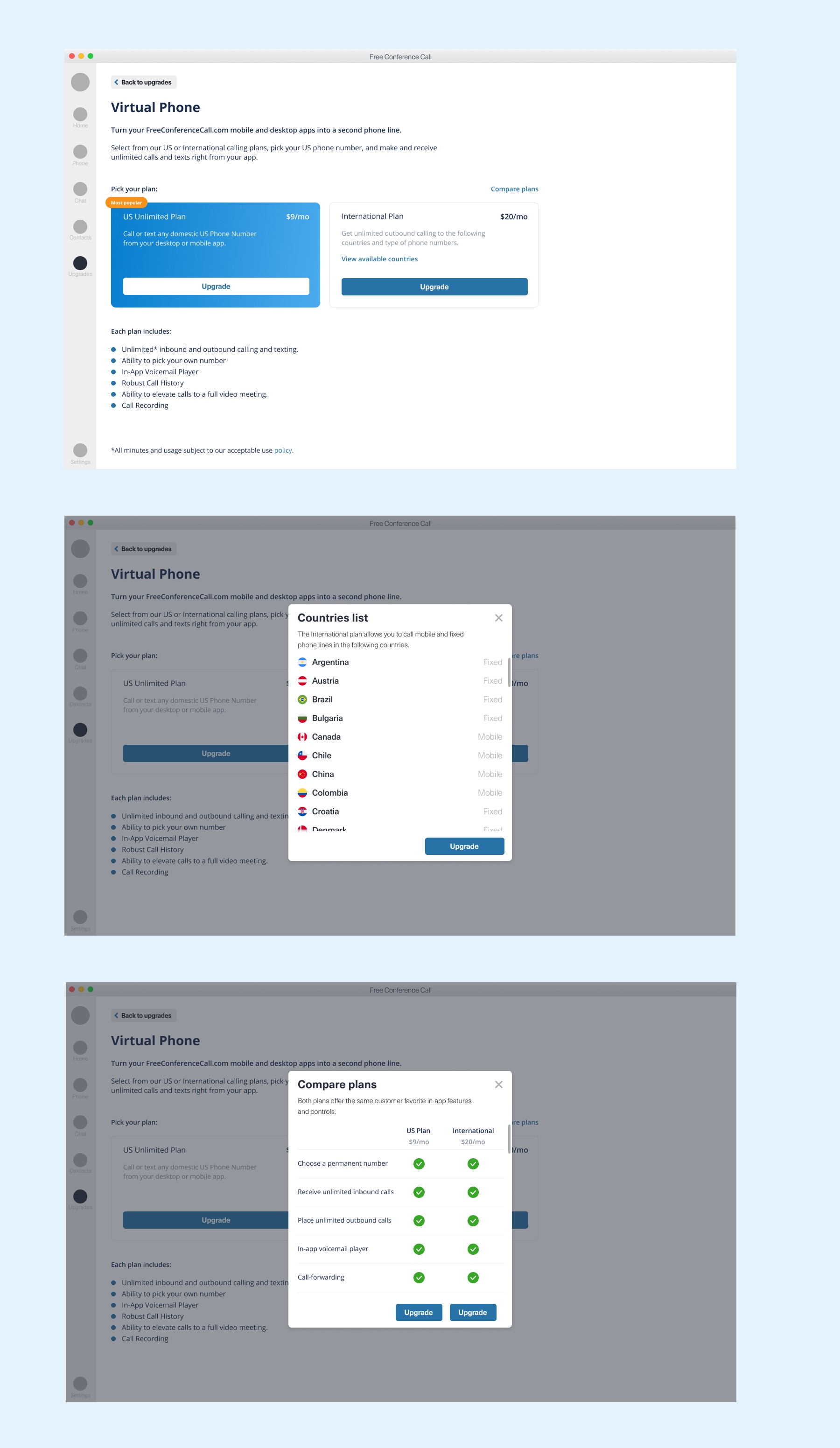
The upgrade strategy focused on creating revenue opportunities that felt aligned with the existing product experience. In addition to traditional premium features like a dedicated phone number, added storage, and custom hold music, the introduction of Pay What You Can created a more flexible option for users who valued the platform and wanted to help support a free service they already relied on.
These results helped validate that monetization could be introduced in a way that supported both business goals and user trust inside a product with an established free-first identity.
At a glance
5% average increase across all upgrades during soft launch
Pay What You Can increased by 10%
Huddle Individual increased by 12%
Introduced Pay What You Can as a way for users to support the product and help keep FCC free
Upgrade options included One Number, extra storage, and custom hold music
4.2-star rating on Android, with 10M+ downloads
Process
The process started with user feedback and business pressure converging at the same time. During 2020, the team needed to improve the mobile experience quickly as demand for conferencing tools increased, while also addressing user frustration with the app’s clunky navigation and low awareness of paid upgrades.
Product managers gathered survey feedback across mobile and desktop, and customer care helped surface the biggest pain points. Two issues stood out early: users did not clearly understand how to start calls, and many were unaware of additional features and upgrades already available in the product.
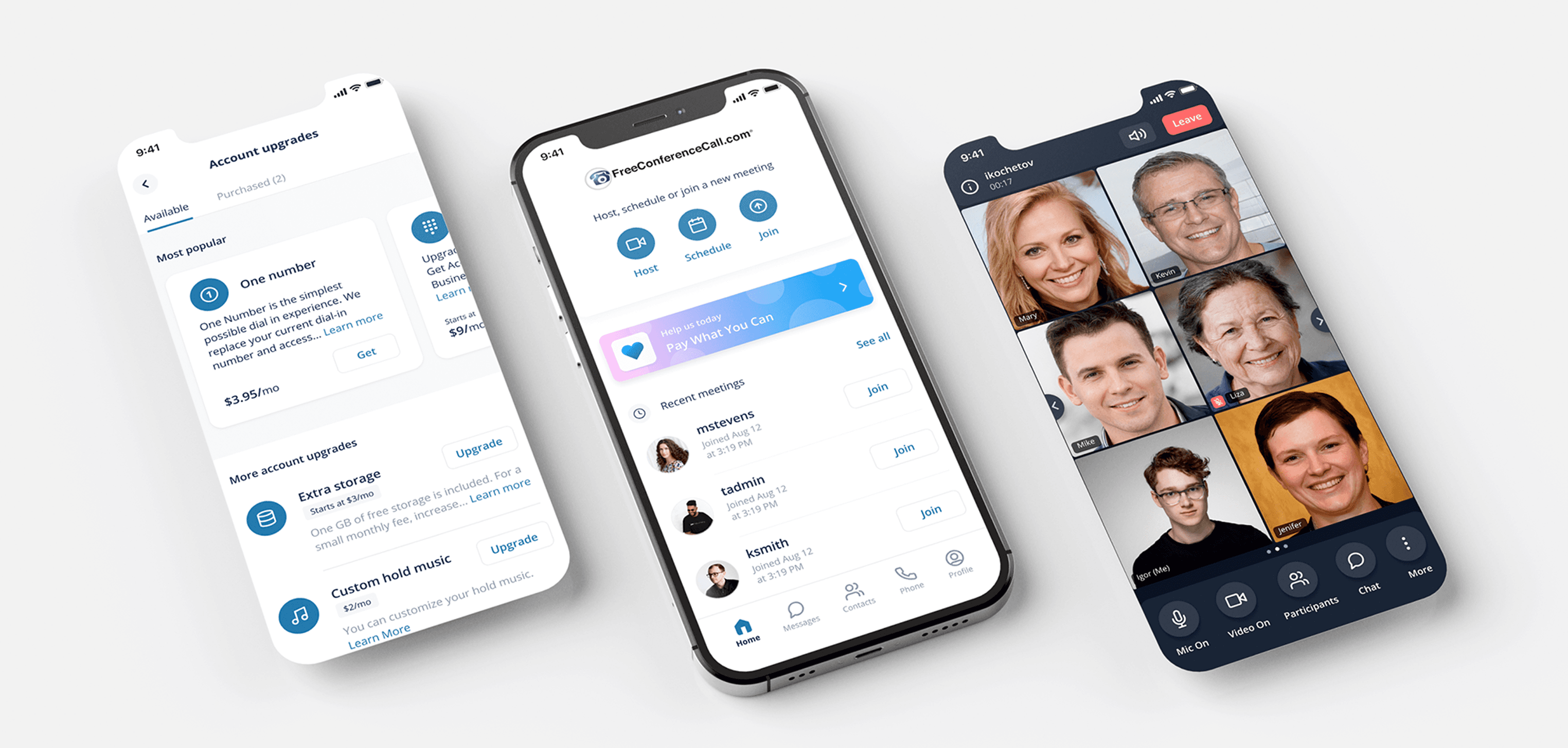
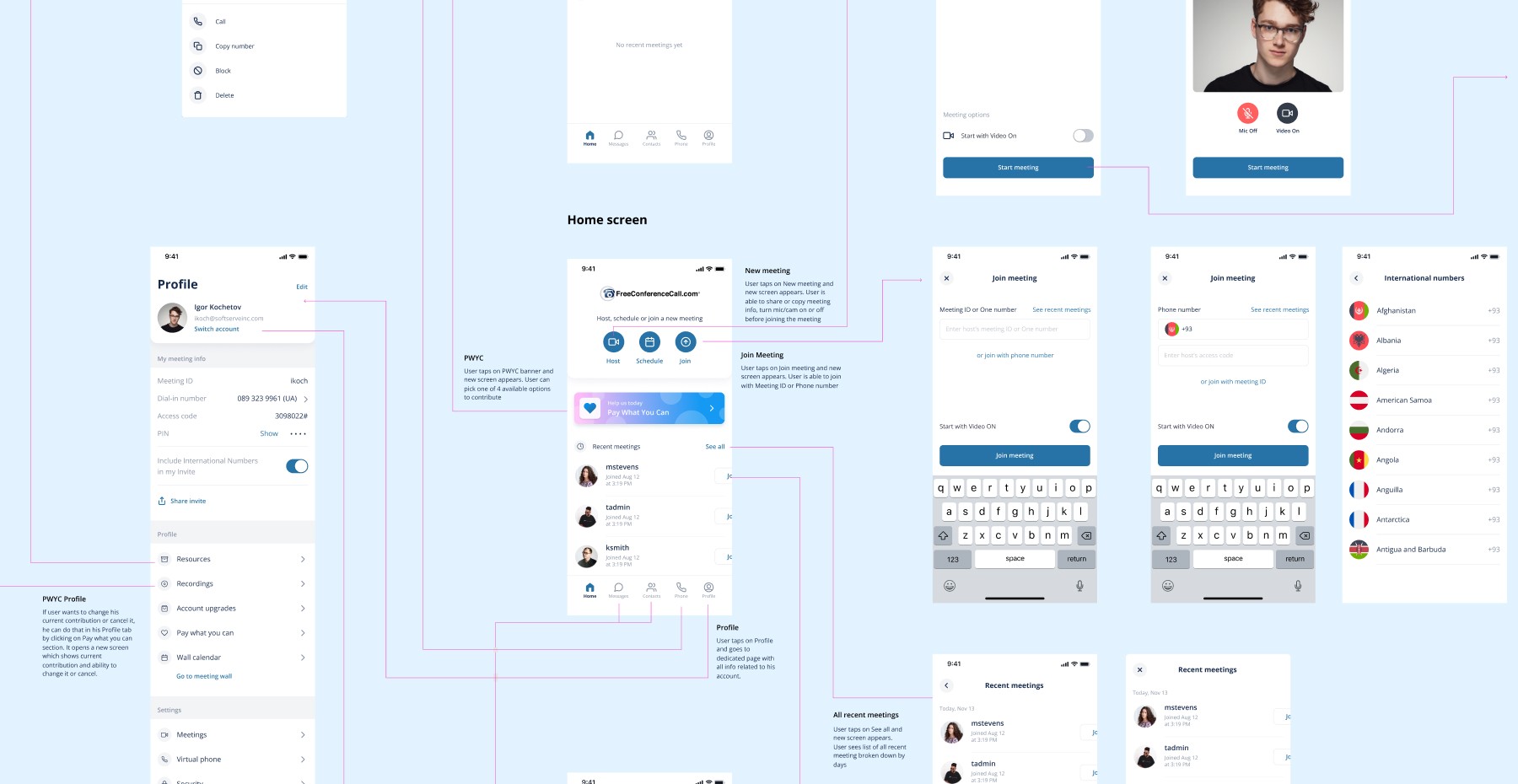
From there, the work focused on simplifying the mobile experience and making premium value easier to discover. The team moved away from hiding core actions under unclear labels like “New” and instead brought Host, Schedule, and Join forward on the home screen. At the same time, upgrades were moved into a more visible position on the homepage and later expanded into a dedicated store page where users could explore features with more context before choosing an upgrade.
The process also stayed iterative after launch. As more feedback came in, upgrade modules were expanded to provide clearer explanations of what each feature included, and new improvements like video preview before joining a meeting were added based on continued user demand.
Findings
Users needed clearer guidance for core actions and stronger visibility into paid value. Survey feedback showed that starting a call was not intuitive, and many users were unaware of upgrades that were already available in the product.
That made two things clear. First, monetization could not feel hidden or disconnected from the main experience. Second, upgrades performed better when they were tied to concrete user value, such as dedicated phone numbers, extra storage, custom hold music, or flexible support through Pay What You Can.
Impact
This work showed that a free product could introduce monetization without weakening user trust, as long as premium value was easier to find, easier to understand, and tied to real user needs. By bringing upgrades into the main experience and giving them clearer context, the product created stronger paths to revenue while still supporting the utility that made FreeConferenceCall.com valuable in the first place.
For me, this project is a strong example of business-aware product design. It combined user feedback, navigation simplification, and monetization strategy into one experience across desktop and mobile. It also reinforced an important product lesson: users are more open to paid value inside a free product when the offering feels useful, transparent, and aligned with the job they are already trying to get done.