
Product: Bullhorn
Type: Live audio platform
Platforms: Mobile app, web player, host studio
Role: Product / UX Design Lead
Focus: Live interaction, multi-surface UX, host and listener workflows
Background
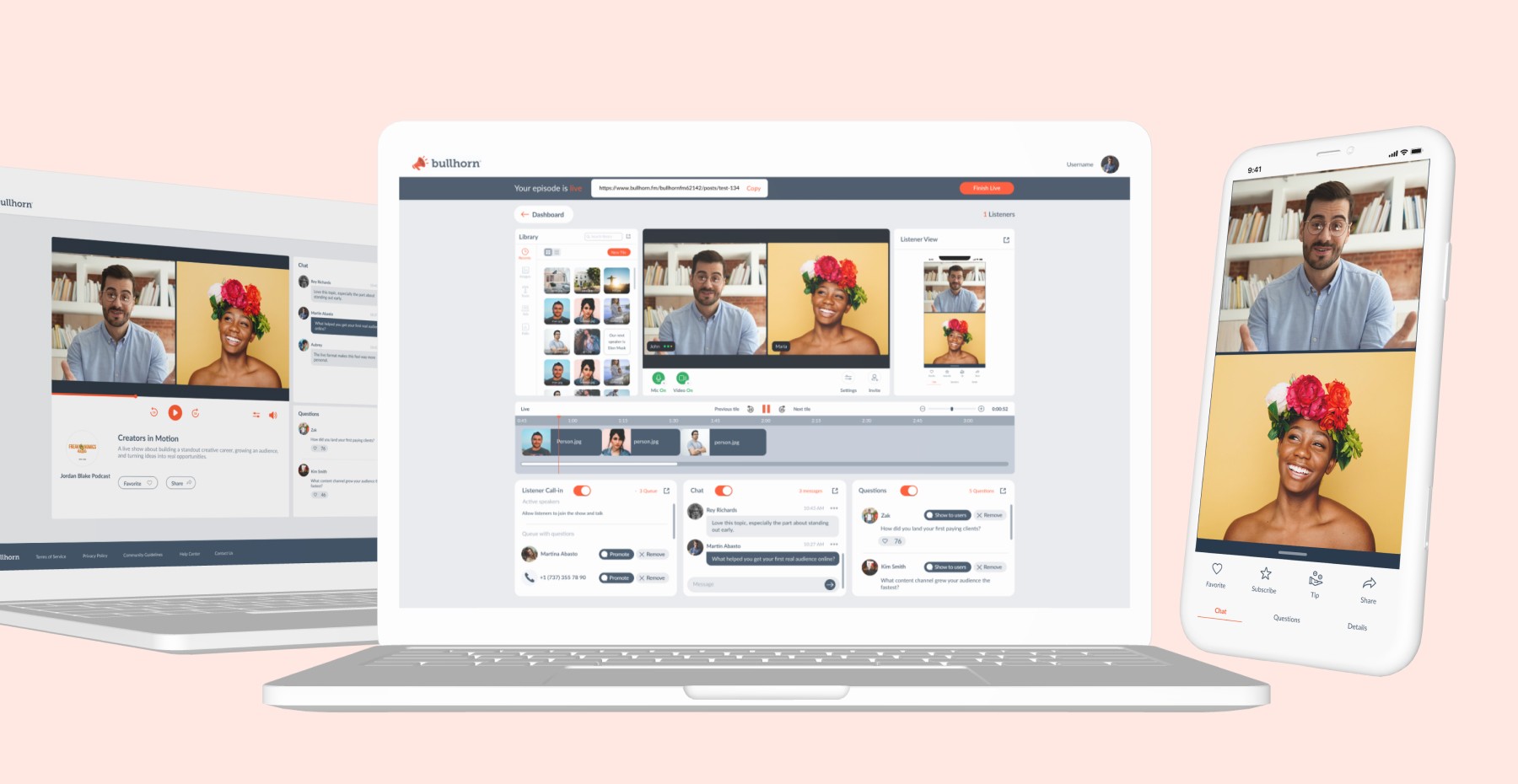
Bullhorn was built to turn live audio into a more interactive experience. Instead of simply listening, users could engage through chat, questions, upvotes, and shared media while hosts managed the live session from a dedicated studio environment.
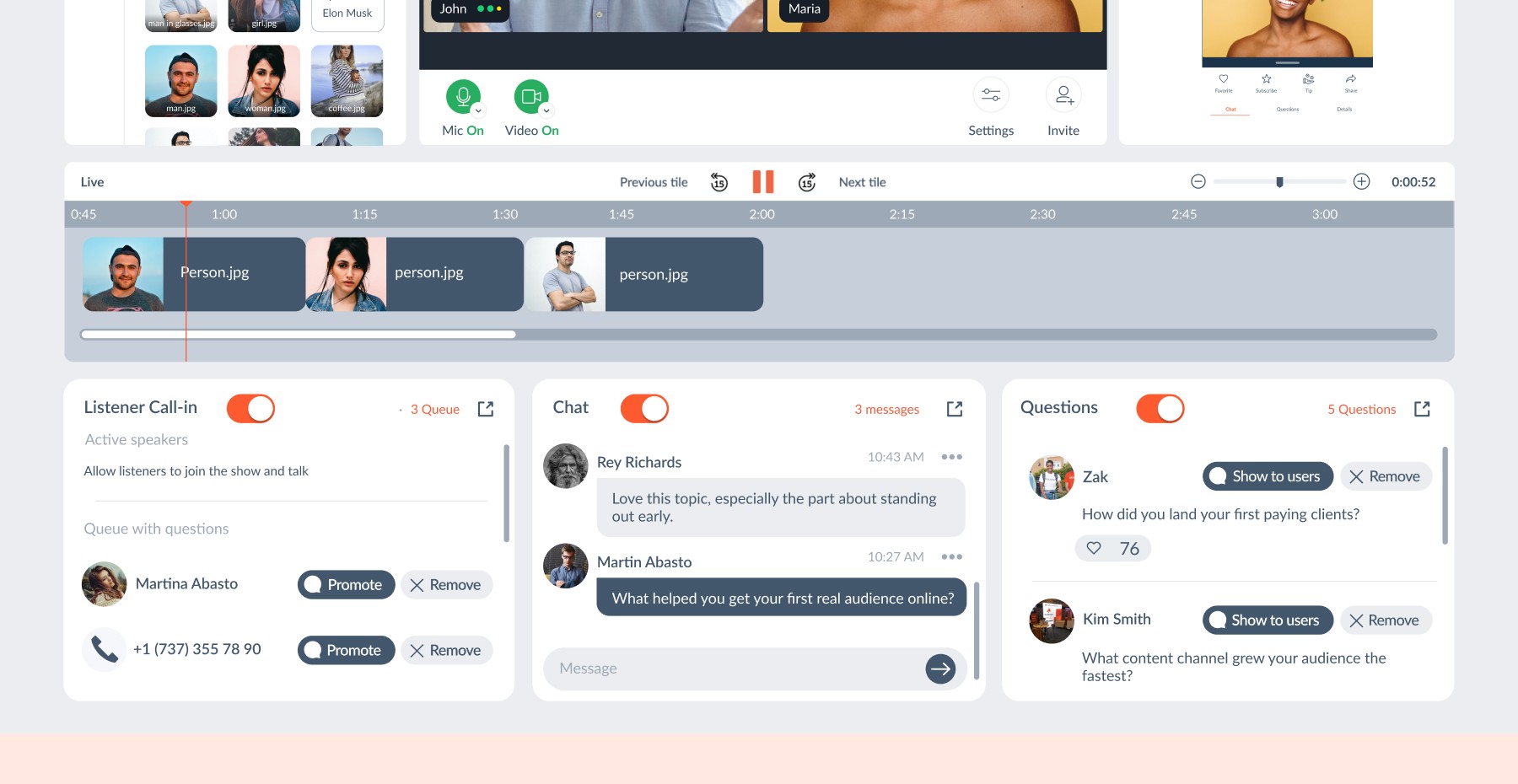
The product needed to support two very different experiences at once: an easy, engaging interface for listeners and a more powerful control system for hosts
The Challenge
CarrierX, the parent company behind FreeConferenceCall.com, already had custom conferencing technology in place. As interest in podcasting continued to grow, the team saw an opportunity: could that same technical foundation be adapted into a more interactive live podcast platform?
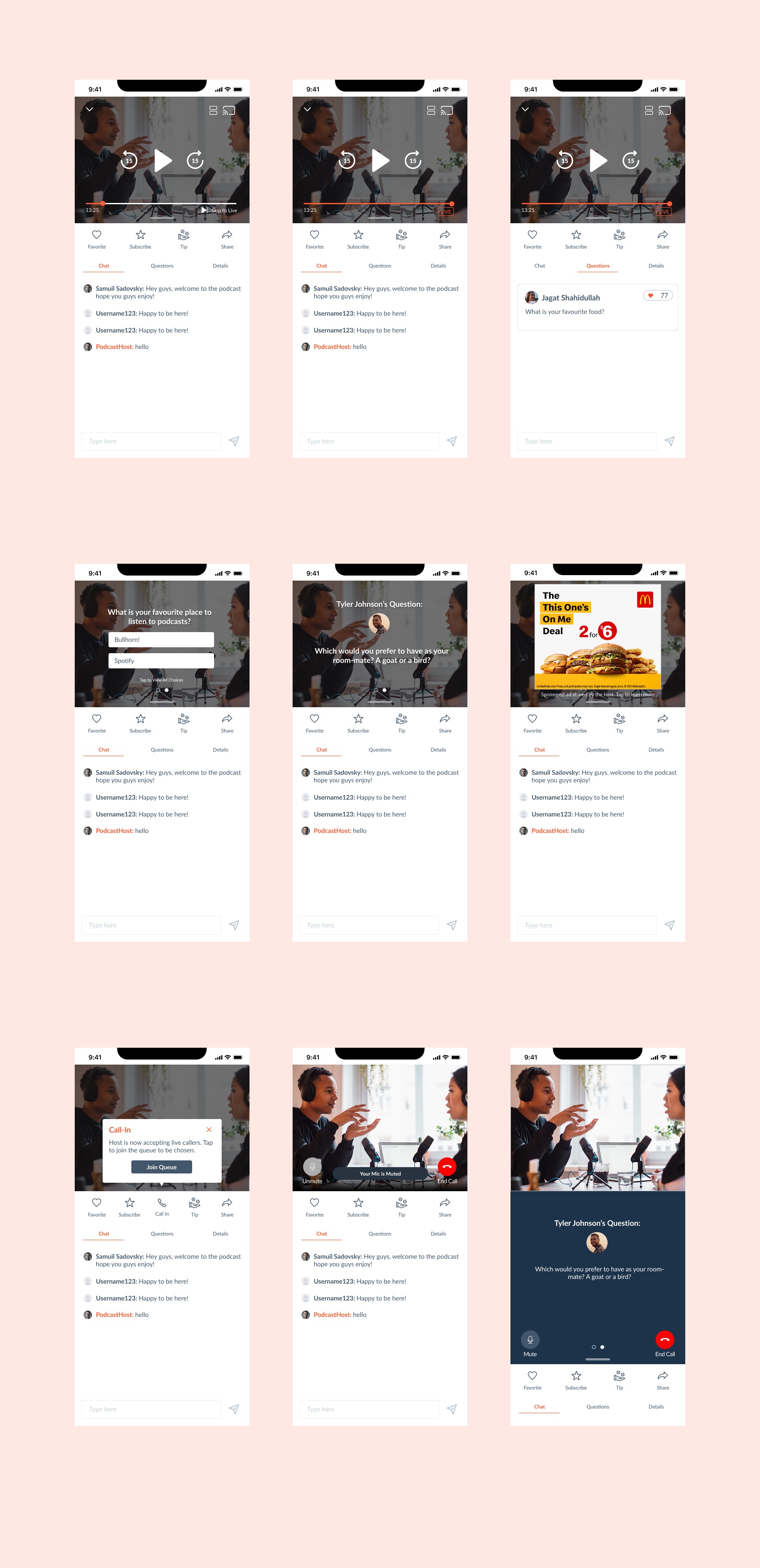
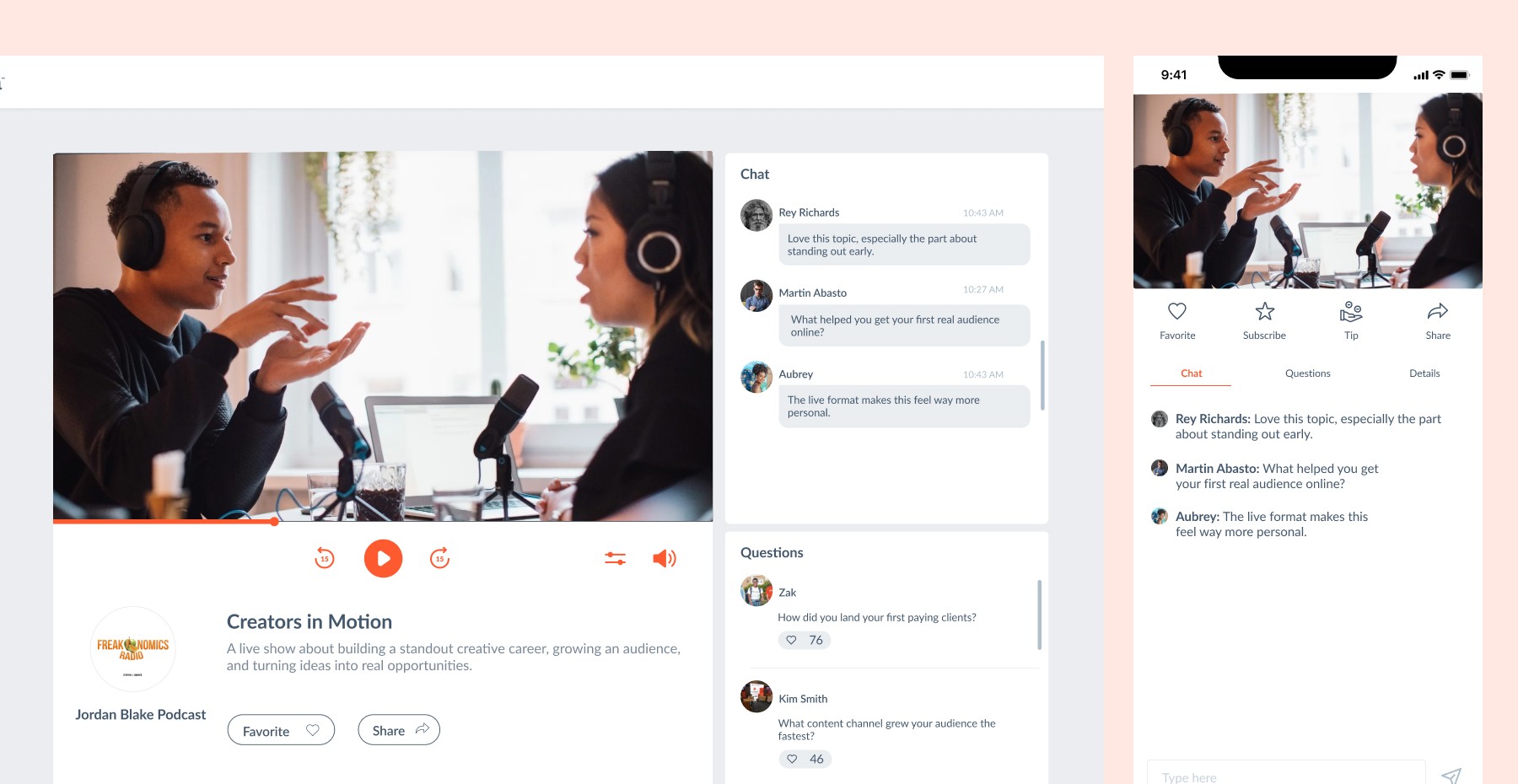
That idea created a new product challenge. The experience had to work across multiple surfaces with very different needs: a web studio where hosts could manage a live episode, and listener experiences across mobile and web where participation needed to feel simple, engaging, and clear in real time. What started as a technical opportunity quickly became a UX challenge around how to make these connected experiences feel like one product.
Role
I joined Bullhorn during a major shift in product direction. The app had originally been built for a different use case — helping teams send voice messages, which aligned with the original “bullhorn” concept. But as adoption lagged and public interest in podcasting continued to grow, the team pivoted toward building a more interactive podcast experience.
At that point, I had been working on the FreeConferenceCall mobile redesign and was brought in to help support the transition. My role focused on shaping the UX and interface direction as the product evolved into something much broader, with new needs across host controls, listener participation, and cross-surface consistency.
Results
Bullhorn helped validate the shift toward a more interactive creator platform by showing clear demand for richer engagement across host and listener workflows.
At a glance
4.8-star rating on the Apple App Store
10K+ downloads
1M+ podcasts available through Apple integration
12–25 podcasters actively went live with callers during your time
Process
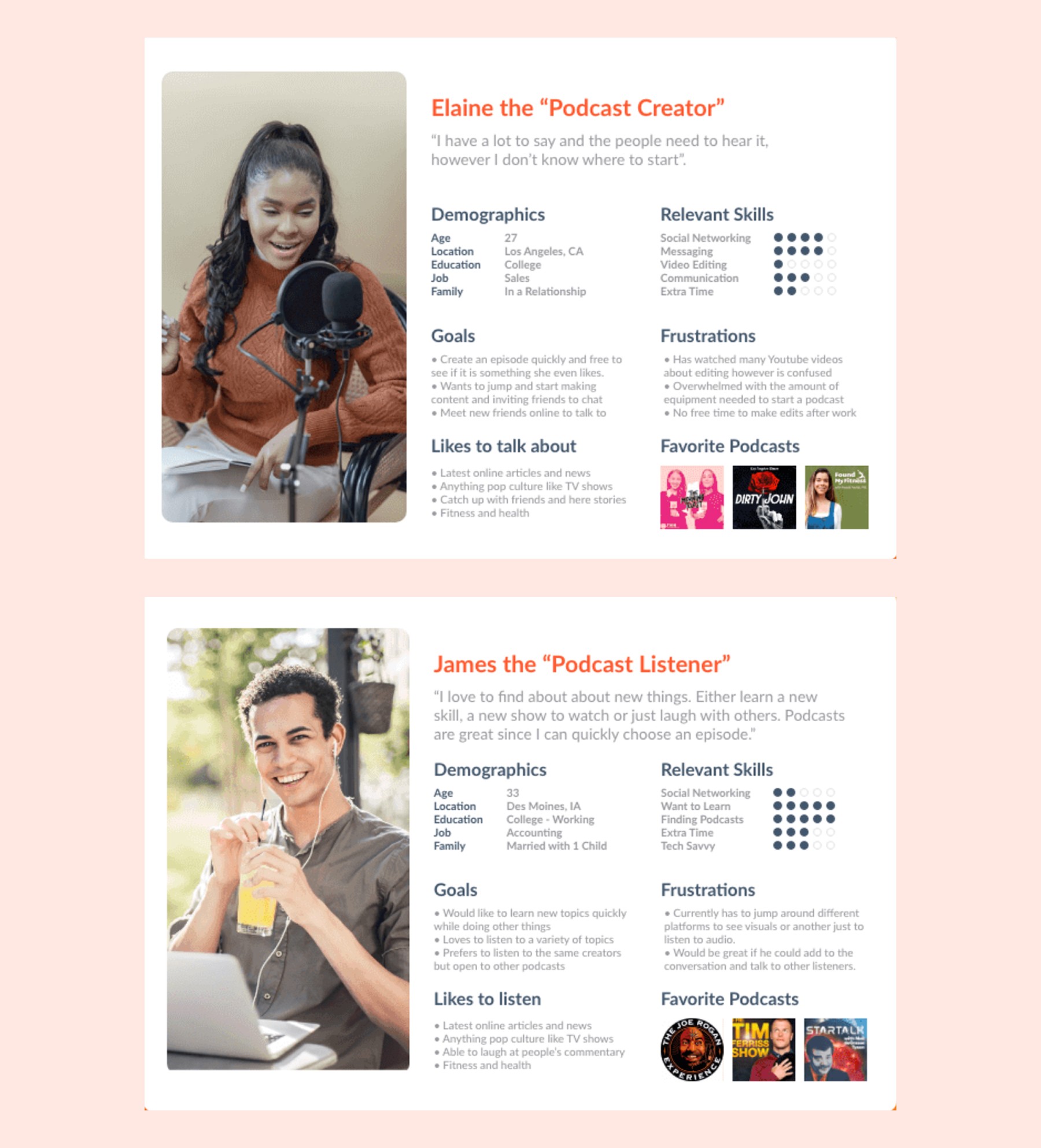
Because Bullhorn was evolving quickly, the process was less about following a rigid framework and more about adapting to a changing product direction. The experience had already shifted from a voice-messaging app into an audio-only podcast platform, which meant rethinking how listeners would engage and how the product should behave across host and audience surfaces.
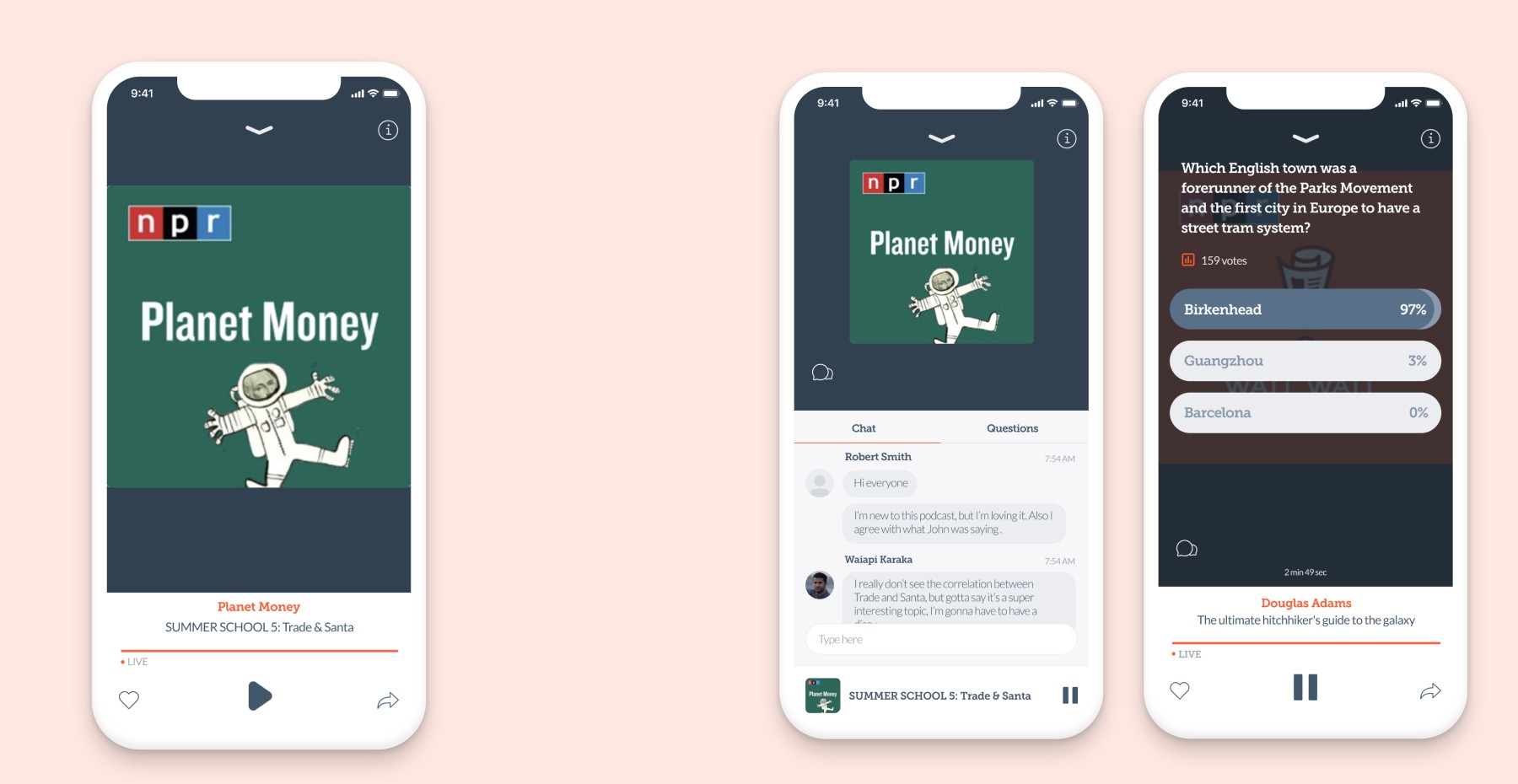
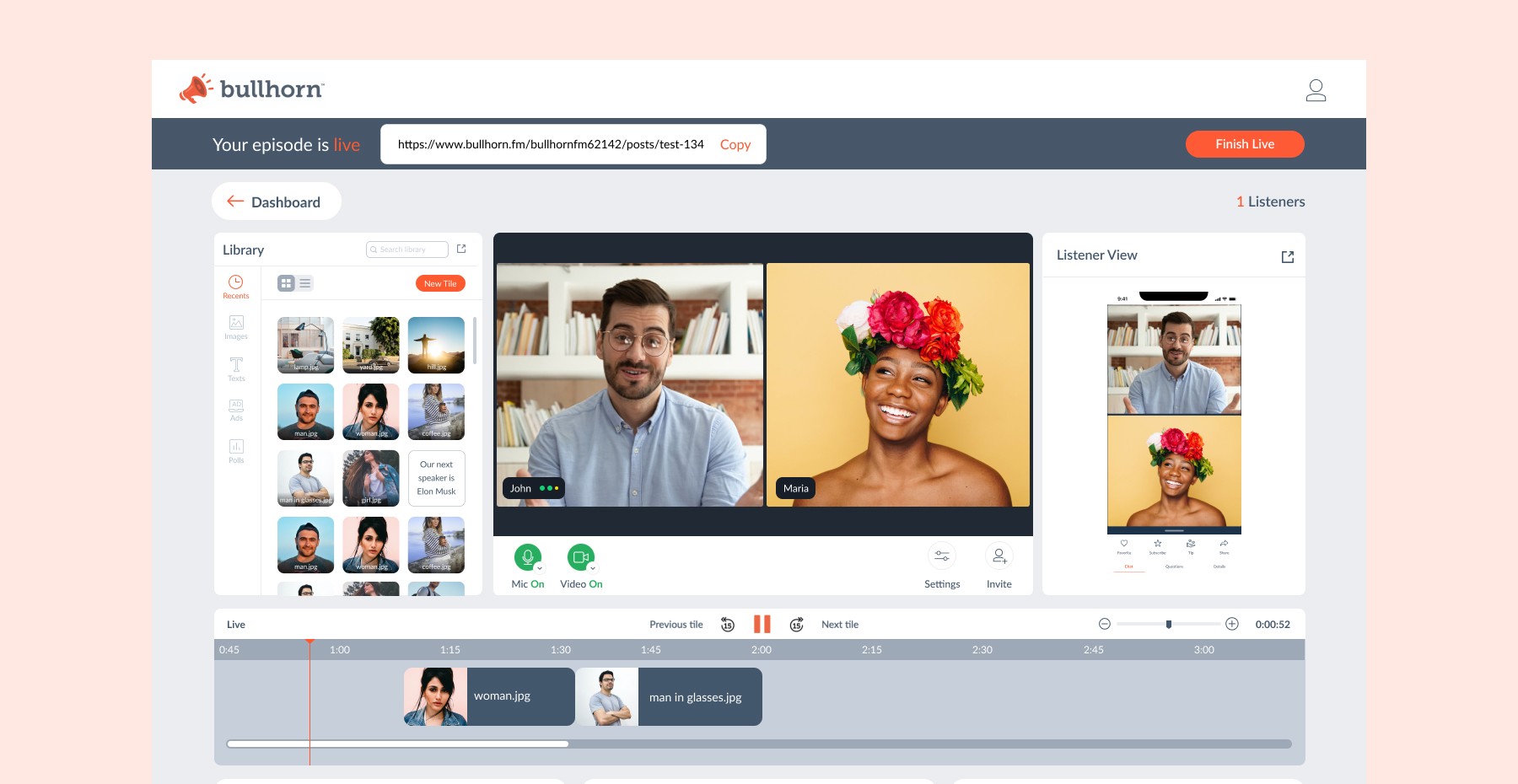
From there, the work focused on mapping flows, reviewing interaction patterns, and aligning internally on what the live podcast experience needed to support next. As the product matured, we began exploring how Bullhorn Studio could give hosts the ability to add visual content into the live experience, which opened the door for richer interactions across the web player and mobile player. Sketches, diagrams, mockups, and prototypes helped us test how these surfaces could work together as one connected system.
Findings
As the product evolved, feedback from active creators and listeners helped clarify what the experience needed to support. The biggest insight was that Bullhorn could not succeed as a collection of separate screens. The host studio, web player, and mobile listener experience all needed to work as one connected system, even though each had very different demands.
Through direct input from podcasters using the platform, listener feedback, internal discussion, and early design exploration, several product realities became clear:
Upvoting questions created a lower-friction way to participate. Not every listener was comfortable calling in live, but many still wanted a voice in the conversation.
Listeners needed more context when hosts referenced visual content. If a creator was reacting to a video or shared media, audio-first users needed ways to stay connected to what was happening.
Video was becoming an important part of the experience. Many creators wanted the platform to support richer live formats as audience expectations continued to grow.
Creators were already thinking about monetization. Ads, promotions, and product tie-ins needed to feel like part of the platform rather than an afterthought.
Impact
Bullhorn helped move an existing product concept toward a more interactive creator platform, shaped by live participation, shared media, and host-side tools that connected the experience across web and mobile.
What makes this project meaningful to me is how much product thinking it required beyond the interface itself. I was working inside a fast-moving pivot, where creator feedback, listener needs, and technical possibilities were all changing the direction of the product. It’s a strong example of how I work best: bringing structure to ambiguity, designing across connected surfaces, and helping a product become clearer as its purpose evolves.