
Product: Bellagent
Type: AI workflow platform
Platforms: Web app, marketing website
Role: Product / UX Design Lead
Focus: Workflow frameworks, lead qualification, UX structure, launch systems
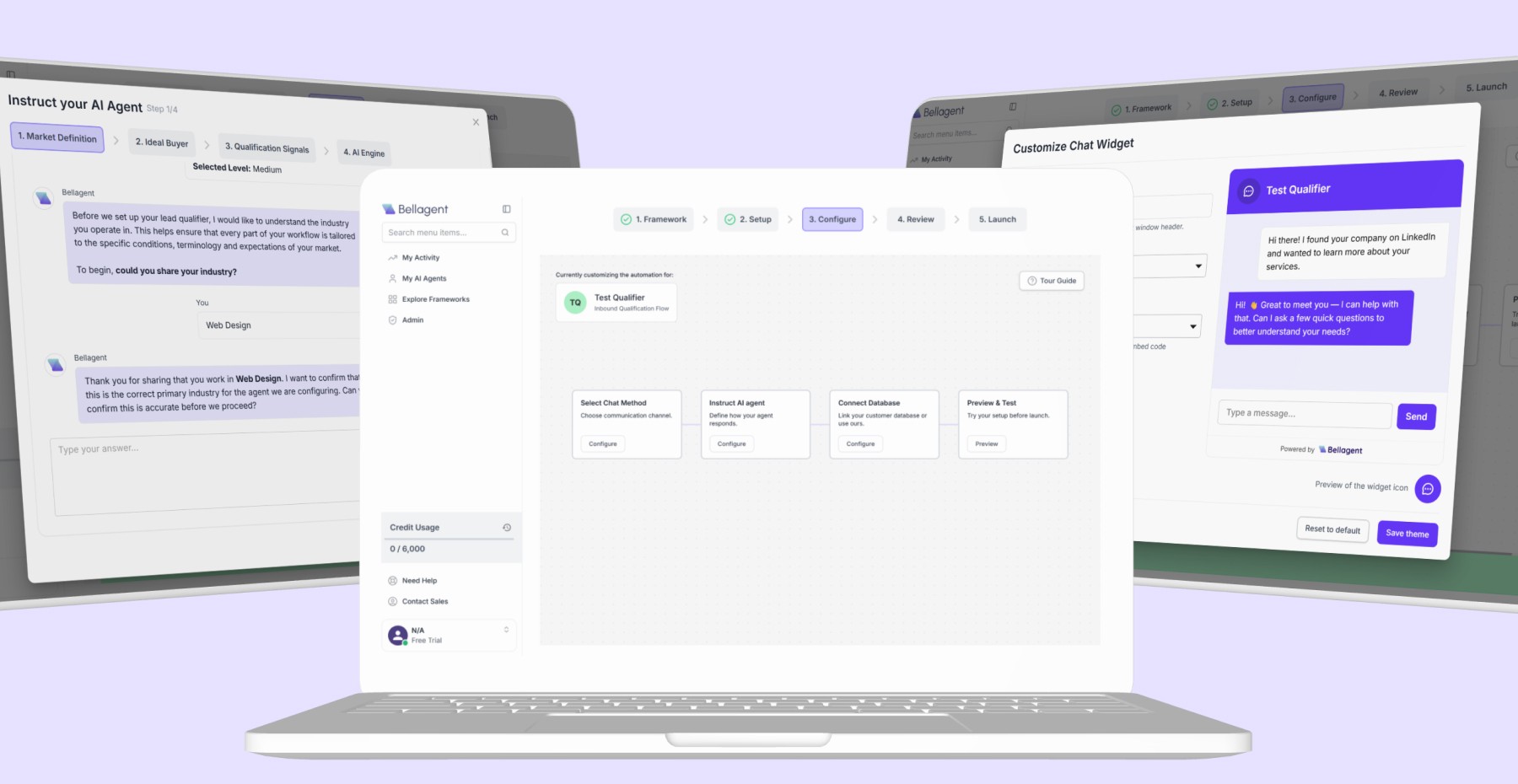
Background
Bellagent was built to help businesses use AI agents in practical ways, but for the product to be useful, it needed more than flexible AI capability. It needed clear frameworks tied to real business workflows.
I began working with the founder during the early product phase, helping shape the initial AI builder before later joining full time as Head of Design and Creative Services. As the product matured, the work shifted toward designing structured frameworks that made AI easier to understand and apply. One of the strongest examples was Lead Qualifier, a workflow created to help businesses capture, assess, and act on incoming leads more effectively.
The Challenge
Bellagent needed to move quickly. I was hired in October with the goal of helping take the product from idea to launch by the new year, at a time when AI agents were becoming a major market focus.
The challenge was turning that momentum into something practical. The product needed to translate complex AI behavior into clear frameworks that businesses could immediately understand and apply. For workflows like Lead Qualifier, that meant designing an experience that could help teams capture, assess, and act on incoming leads in a way that felt useful, trustworthy, and scalable.
At the same time, major product decisions had to be made quickly across the app, design system, and website so the team could move fast without losing long-term structure
Role
I joined Bellagent early, first working directly with the founder on the initial AI builder and later joining full time as Head of Design and Creative Services.
My role focused on turning AI complexity into structured, launch-ready workflows. I led UX and visual direction across the product and website, helped define framework structure with engineering and product, and worked alongside another product designer to make the experience clearer, more usable, and easier to scale.
Results
Bellagent moved from an early concept to a launched product in February 2026, taking the product from early build phase to market in about 4 months while interest in AI agents was rapidly accelerating. The launch centered on three featured framework workflows that made the product easier to understand and position for real business use cases: Advanced Support Flow, Inbound Qualification Flow, and Dynamic Prep Flow. These were prebuilt AI agent workflows that could be customized and connected into live business operations.
At a glance
Moved from early concept to launch in about 4 months, launching in Feb 2026
Helped grow from an initial team of 2 to 30 people during product development
Supported launch of 3 featured frameworks: Advanced Support Flow, Inbound Qualification Flow, and Dynamic Prep Flow
Led UX and visual direction across the product and launch website
Launch coverage picked up by Yahoo Finance and AP News
Process
The process had to create clarity fast. I worked with the founder, an offshore team, product, and another designer to turn early ideas into structured workflows the team could build against.
I selected Untitled UI as the design-system foundation so we could move faster and focus more on UX, framework logic, and product clarity. From there, I worked directly with the founder on wireframes, ticket requests, and framework concepts, while also setting up a sprint process to organize product and marketing work.
In parallel, I researched 25+ AI and automation competitors and tested several firsthand to understand how they handled onboarding, workflow setup, and agent-building patterns.
Findings
The product became easier to understand when AI capabilities were framed through clear business workflows instead of open-ended agent-building. Users needed stronger starting points, clearer structure, and frameworks that felt tied to real business outcomes.
That led us to focus on launch-ready workflows like Advanced Support Flow, Inbound Qualification Flow, and Dynamic Prep Flow, each designed to make the platform easier to explain and easier to adopt. Direct founder feedback also helped refine how these workflows were framed, prioritized, and adjusted as the product moved toward launch.
For Inbound Qualification Flow, the value was especially clear. Businesses needed a better way to capture, qualify, and route incoming leads without relying on inconsistent manual follow-up. That made the framework easier to position, easier to understand, and more directly tied to measurable business impact.
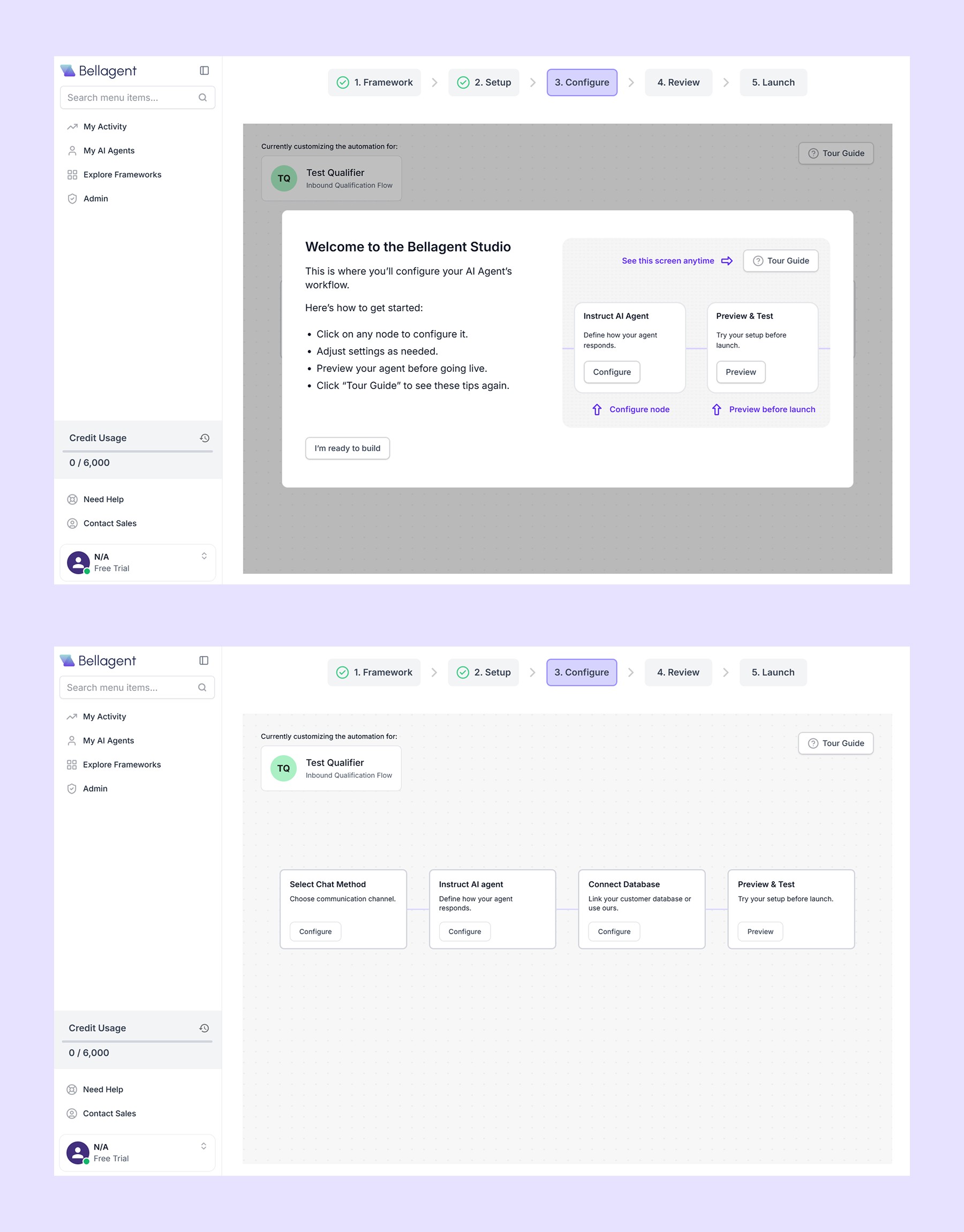
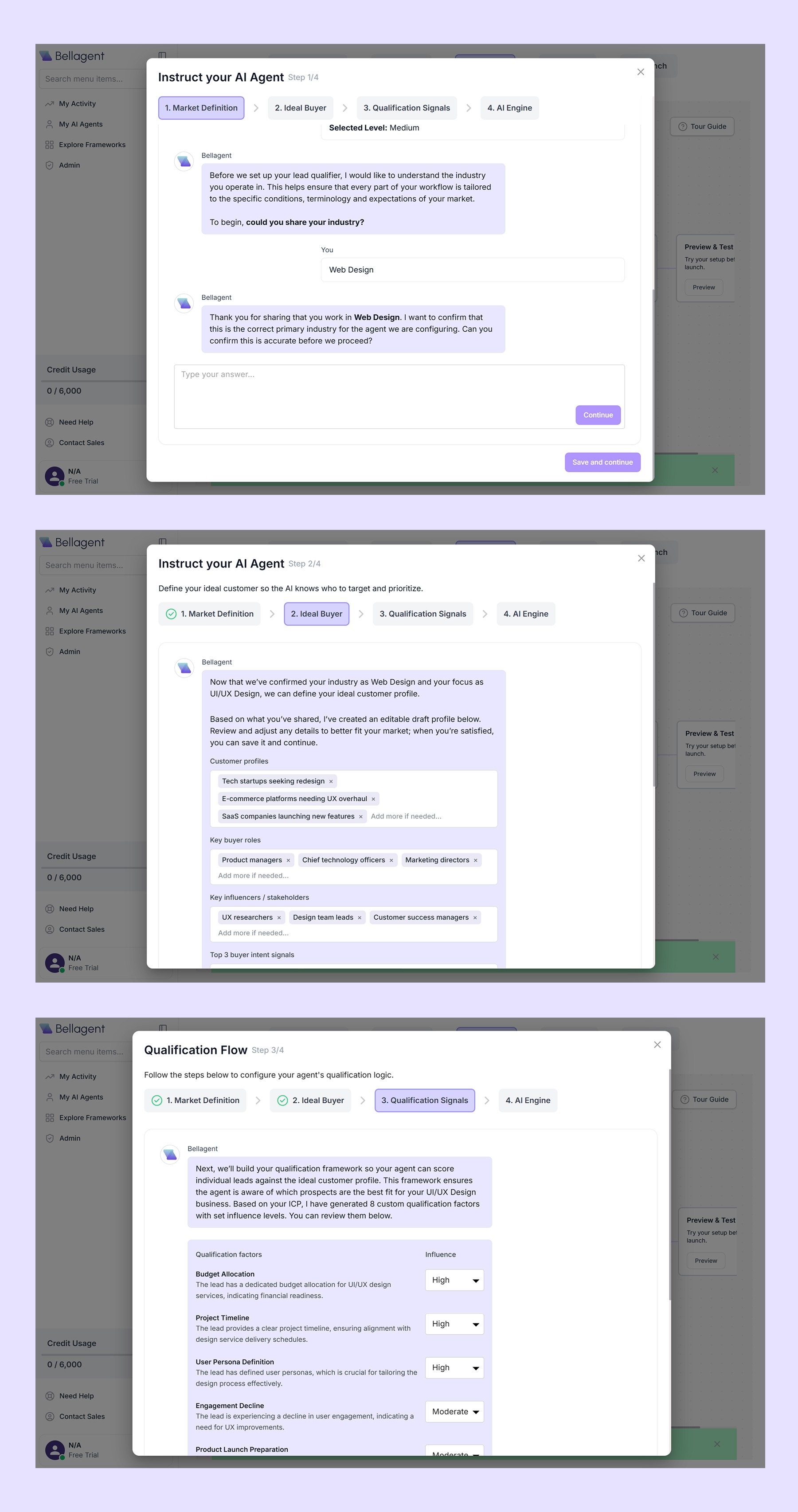
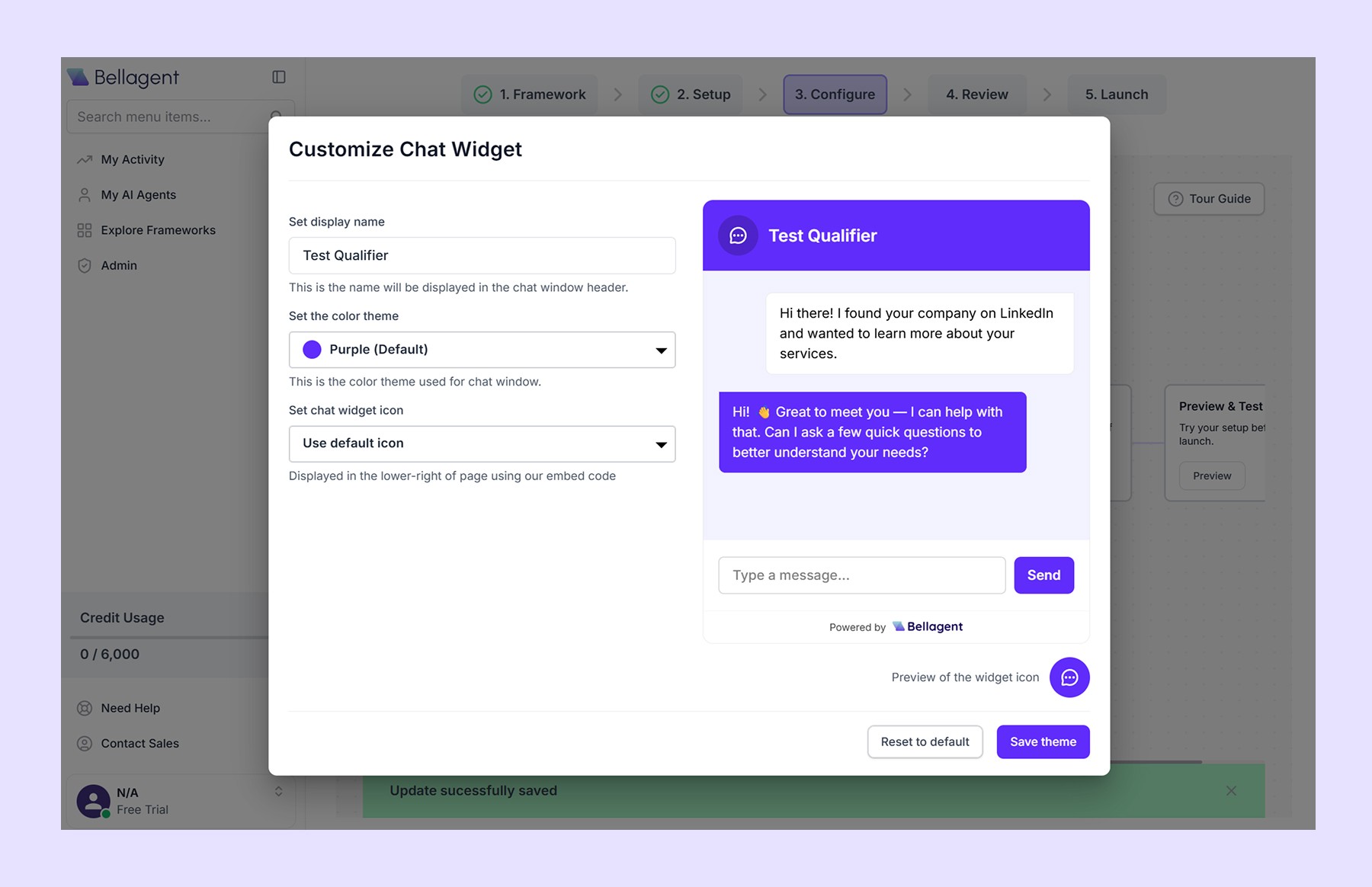
Impact
Bellagent helped turn AI from a broad concept into something more practical and easier to adopt through structured workflows. Framing the product around clear use cases, especially Inbound Qualification Flow, made it easier for businesses to understand where AI could fit into real operational work and what value it could create. That direction also resonated with companies using the platform, including Enova, iManage, Staffbase, JRK Property Holdings, and Workable.
The broader product story also gained traction beyond the app itself. Bellagent’s launch announcement was distributed through Business Wire and picked up by Yahoo Finance, helping reinforce the company’s early market presence. Public launch materials positioned Bellagent around practical AI agents for business workflows, highlighted 1,300+ integrations, and described a product direction centered on growing automation capabilities and expanding toward more customizable framework creation.
For me, this project is a strong example of the kind of product work I want to keep doing: taking a fast-moving technical space, identifying the workflows that matter most, and shaping product experiences that make adoption easier for real businesses. It reinforced an important lesson in AI product design. People respond better when the experience starts with a clear workflow, a visible business outcome, and enough flexibility to grow into more advanced use cases over time.